
Our impact and commitment in FY26
Our purpose is to keep our customers moving, sustainably. This includes ensuring that human rights are upheld through all our relationships, ensuring that modern slavery and human trafficking are not present in our business or supply chain.
This is our tenth annual Transparency Statement covering our financial year up to the end of March 2026. We’re proud to share the strides we’ve made in this critical area, in line with the Modern Slavery Act 2015.
The information disclosed in this statement has been gathered by our Sustainability Manager with support from multiple key colleagues and groups across the business.
Responsibility for the oversight and monitoring of our modern slavery approach sits with our Chief People, Product and Transformation Officer, Stuart Price, who sits on our Executive Committee. Stuart has eight years experience as a trustee at Stop The Traffik, strengthening our understanding of modern slavery risks and support our commitment to ethical business practices.
“The risk of modern slavery is increasing, both within the UK and globally. At Zenith, we’re addressing this through our People Powered Impact plan.
“In FY26 we continued to raise awareness of modern slavery with our colleagues and engage our supplier partners around human rights, vital steps to ensure that modern slavery does not take place anywhere within our supply chain.”
Mark Wilson, Sustainability Manager


“Within our business and through our supply chain partners, we’re committed to delivering a safe and healthy workplace, free from exploitation and discrimination.
“Modern slavery is a significant global challenge and I am proud of the progress we have made this year to improve awareness and strengthen standards across our business and our supply chain.”
Stuart Price, Chief People, Product and Transformation Officer
About our organisation
A leader in ethical vehicle solutions
Zenith Group is the UK’s leading independent leasing, vehicle outsourcing, and fleet management provider and operates across the following Group companies:
- Zenith Vehicle Contracts Limited
- Provecta Car Plan Limited
- Leasedrive Limited
- ZenAuto Limited
- Contract Vehicles Limited
- Contract Vehicle Fleet Services Limited
- Contract Vehicles Rentals Limited
- Zenith Remarketing Limited
We directly fund 72,194 vehicles and have 167,900 vehicles under management.
We operate from fourteen locations across the UK, including two main offices in Leeds and Altrincham, alongside a shared workspace in Solihull, eleven rental yards, and one heavy goods vehicle (HGV) workshop in Glasgow.
Our business model is dynamic and is tailored to a wide variety of end markets, providing resilience and range of growth opportunities. Our strong customer service proposition is recognised and valued by our customers through our high retention rates.
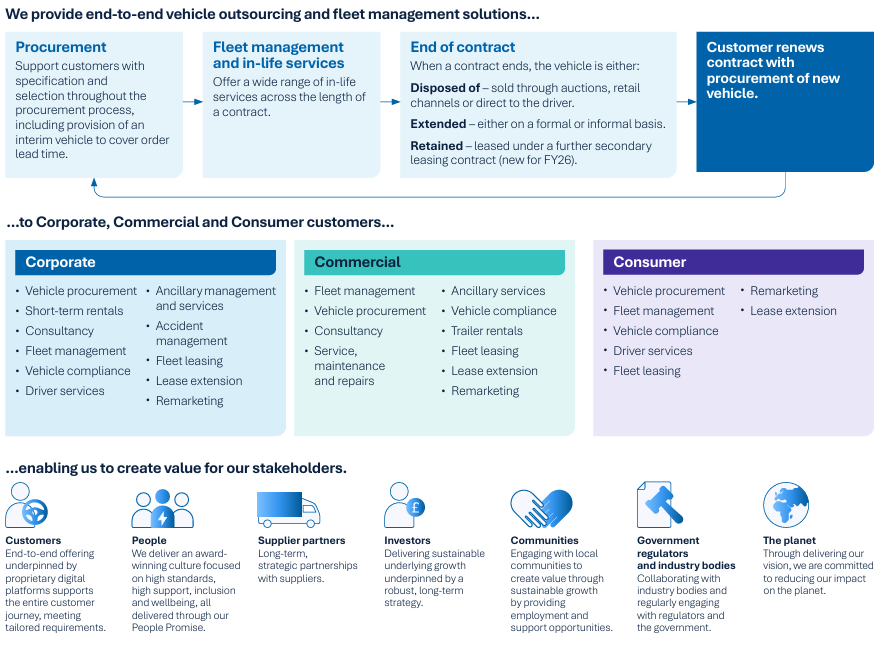
You can find out more about our purpose, values, and structure in the infographic below and within our FY26 Annual Report.
Our people
Our teams includes administration staff, administrators, professional services specialists in areas including roles such as finance, information technology, marketing, customer service representatives, sales professionals, skilled automotive mechanics, technicians, and welders.
We complete pre-employment screening checks for all new starters to ensure that each individual has the right to work in the UK and is free from coercion by other third parties.
These checks help to ensure that Zenith would never participate or engage in the following
- Requiring new starters to lodge “deposits” or their identity papers to work at Zenith;
- Utilising or employing child labour.
Responsibility for ensuring all employment contracts comply with applicable legislation and provide effective employee protections, such as freedom of association, and uphold Human Rights sits with our People team. Our in-house Legal and Compliance teams offer guidance and advice to our People team.
We do not charge any recruitment-related fees or charges to candidates or new starters. Nor do we retain any deposits either directly or through recruitment agencies.
We also do not retain original identification cards, passports, or other personal documents of employees.
We have minimal use of agency employment and only where there is a business need.
For all contractors or temporary employees sourced through an agency, we will have completed due diligence on the agency to ensure that adequate and effective pre-employment checks are completed by them, in addition to Zenith.
Our culture
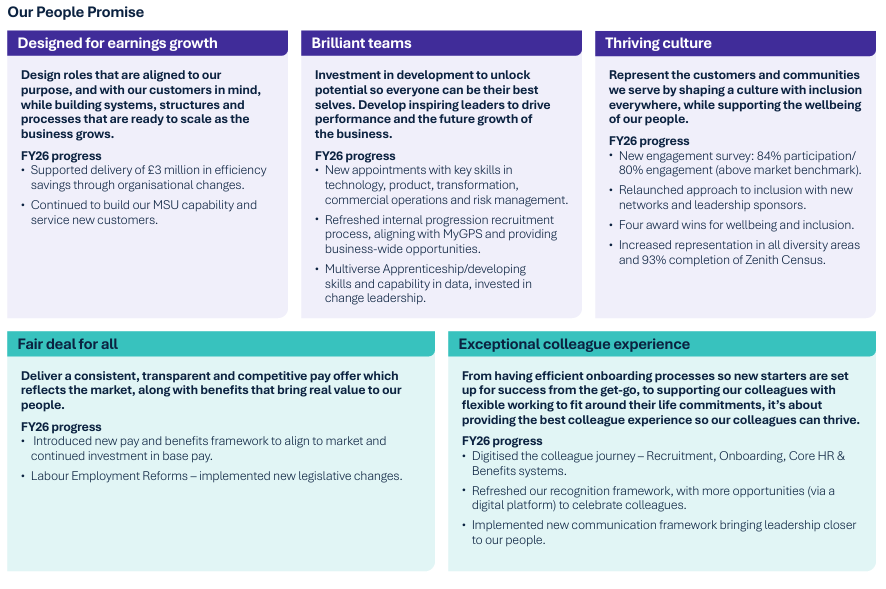
We’re committed to building a resilient, high-performing organisation. We are guided by our People Promise, with three clear focus areas aimed at creating a thriving culture with brilliant teams that are designed for growth. Our promise is underpinned by commitments to provide a fair deal for all and an exceptional colleague experience.
Further information can be found within the ‘Our People’ section in our FY26 Annual Report.
Our supply chain
Diverse, dynamic, and diligent
Zenith’s supply chain is operationally and geographically diverse to ensure that we can deliver the best possible service to all our customers. To ease our analysis of modern slavery risk, we have grouped our suppliers into several categories, as seen in the infographic below.
Procurement
Vehicle manufacturers and dealer network
Short-term vehicle rental providers
Fleet Management and In-life
Vehicle garages
Vehicle repair bodyshops
Emergency Assistance
Tyre and glass providers
Delivery and collection agents
End-of-life
Auction houses
Direct Zenith Suppliers
Recruitment agencies
IT providers
Professional services – legal and marketing
Facilities and waste management providers
We work closely with our supply chain partners across all categories to develop strong relationships, based on shared values, that uphold and protect human rights.
- Our supply chain includes suppliers of both goods and services.
- We map our supply chain using in-house knowledge and expertise. Responsibility for this process sits with our Supplier Governance and Risk Forum, which has representatives from our Procurement, Legal & Compliance teams, as well as other key business stakeholders and meets regularly.
- The vast majority of our supply chain is UK-based, such as our fleet management and in-life services and direct Zenith suppliers.
- Some key suppliers, such as vehicle manufacturers and some IT software providers are based internationally. These are respected multi-national organisations with mature corporate governance frameworks.
- We manage our suppliers appropriately depending on their criticality to Zenith or the level of risk associated with their goods or services. Key suppliers are assigned a Zenith colleague as internal business owner to manage the relationship.
- Zenith takes a collaborative approach with our supply chain, which encourages transparency. We provide appropriate support, guidance, and monitoring to tackle any reported issue.
- We have not mapped the additional tiers of our supply chain, beyond tier one. However, in FY25, we engaged with key direct suppliers to Zenith, specifically our vehicle manufacturers, tyre, and glass providers, to gain a greater understanding of their policies and procedures, and how they monitor their own value chain. We took assurance that our key suppliers across these areas are effectively monitoring their suppliers. Further information can be found in our FY25 Modern Slavery Transparency statement.
We’re continually refining our understanding of our supply chain, working closely with our suppliers to ensure transparency and ethical practices at every level, including understanding the additional tiers of our supply chain.
Our policies
A robust framework for ethical business
We have the following policies and procedures to uphold human rights and combat modern slavery:
- A human rights and anti-slavery policy guided by the UN Universal Declaration of Human Rights and the International Labour Organisation (ILO) Declaration on Fundamental Principles and Rights at Work.
- Our Employee Handbook sets out our approach to and expectations of colleagues regarding equal opportunities, recruitment and selection, discrimination and harassment, and whistleblowing.
- All new and re-negotiated supplier partner contracts include modern slavery provisions.
- Zenith mitigates the risk of doing business with organisations who are controlled by sanctioned individuals or legal entities. We ensure this through sanctions checking conducted via a third-party tool and governed by our anti-money laundering and counter-terrorist financing (AML and CTF) policies.
- We have a Supplier Governance and Risk Forum including key stakeholders from Legal, Compliance, Information Security, and Operations including colleagues in procurement. They are responsible for identifying, assessing, and managing compliance risks across our supply chain partners, including modern slavery.
- A supplier lifecycle policy, Supplier Charter, and Environmental, Social and Governance (ESG) policy.
- All policies are communicated to Zenith colleagues during onboarding, and these can be accessed at any time via our company intranet.
- We communicate relevant policies to suppliers, in particular the supplier charter during pre-engagement and to our key suppliers following any changes.
- All policies are drafted and updated via our own colleagues, with support sought from external subject matter experts such as consultants and industry bodies where necessary and appropriate.
Risk assessment
Proactive and comprehensive
We have assessed modern slavery risk within our direct operations to be low.
This is based on our locations being UK-based, our colleagues performing skilled professional roles, and our structured employment practices and controls.
We recognise that modern slavery remains a significant global challenge, particularly within extended supply chains. We therefore continue to strengthen our due diligence, supplier engagement and colleague awareness activities to identify and address potential risks.
We have the following controls in place to ensure that modern slavery is not present within our own operations or our supply chain.
Within Zenith
- Our office locations being entirely UK-based.
- Our employees are generally skilled professionals.
- Our employees are largely directly employed by Zenith.
- We have minimal use of temporary or agency employment.
- Annual modern slavery and financial crime training for key colleagues.
- Independent third-party whistleblowing hotline – colleagues can report instances of modern slavery to HR directly, their manager or through an independent third-party hotline.

Supply chain
- Suppliers are subject to our supplier procurement and vehicle lifecycle policies, with due diligence completed on all new suppliers and periodically repeated for existing suppliers.
- We negotiate to include modern slavery and human rights clauses into all new and renegotiated supplier contracts.
- Key suppliers have a dedicated Zenith business owner to manage the relationship and drive continuous improvements.
- We negotiate to incorporate our Supplier charter into all new and renegotiated supplier contracts .
- The majority of our key suppliers are large, respected organisations (e.g. vehicle manufacturers, IT providers, national garage networks) with strong levels of corporate governance.
RISK ASSESSMENT FINDINGS
We completed a modern slavery risk assessment during FY24 to identify and assess the possible likelihood and impact of modern slavery occurring within Zenith and our supply chain. This is light-touch reviewed every financial year, with a full refresh scheduled for FY27.
The assessment is co-ordinated by our Sustainability Manager and covers the four stages outlined in the infographic below. The outputs of this assessment were provided to our Supplier Governance and Risk Forum, and Executive Committee, alongside the Modern Slavery Transparency Statement.
Our risk assessment did identify some areas of potential concern within our supply chain which are summarised below. We are confident that these concerns are appropriately mitigated by our own controls, and the actions taken by our direct tier 1 suppliers as follows:
| What is the concern? | What does this mean? | Mitigation by Zenith and/or our supply chain partners |
|---|---|---|
| Rare earth minerals and conflict minerals in vehicle production. | The mining of rare earth minerals (such as cobalt, lithium, nickel) and conflict minerals (tin, tantalum, tungsten, and gold) is mainly completed in high-risk countries or areas, where it is known that forced and child labour takes place. | We have highlighted this issue in our previous modern slavery statements. To assure ourselves that manufacturers are effectively managing this risk, we conduct regular desk-based analysis of our top 10 brands modern slavery and human rights statements. In FY25, we took this a step further and engaged our top 10 brands directly via our Sustainability Manager and Head of Manufacturer Engagement. We used their responses alongside any additional information shared to score each brand’s human rights and modern slavery approach. We scored each brand for their governance structure, actions to combat modern slavery, and KPIs/targets to monitor progress. Based on this, 8 of the 10 brands had excellent frameworks. We intend to develop our modern slavery and human rights engagement with the two lower scoring brand’s over the coming years. |
| Vehicle valeting | The cleaning of the interior and exterior of a vehicle. It has been reported by the press and charities that this sector is higher risk for modern slavery offences | Zenith’s vehicles are required to be valeted on-site at our accident management, service, maintenance, and remarketing suppliers. We complete ongoing monitoring of these suppliers to ensure that they continue to complete vehicle valeting on-site as confirmed during the pre-contractual and ongoing due diligence. |
| Facilities and waste management | The cleaning of Zenith sites including the disposal of the waste produced. Modern slavery victims were identified in this industry following Operation Fort. | We have several waste management supplier partners across our sites and facilities. The relationship is either directly with Zenith or via our landlords. Following a desk-based analysis in FY25 of our suppliers’ publicly available information regarding modern slavery, we are assured that they have appropriate awareness of the modern slavery risk and have implemented appropriate training, policies, and controls. |
OUR DUE DILIGENCE
Thorough and proportionate
Our due diligence processes are tailored to the level of assessed risk and our level of control or influence in each relationship. New suppliers must complete a pre-contractual due diligence questionnaire addressing slavery and human trafficking. Existing suppliers must re-complete due diligence periodically or when there is a significant change to their provision. The sustainability topics covered during our due diligence assessment, including modern slavery, are reviewed by our sustainability manager through a review of a supplier’s responses and documentation such as their Modern Slavery Transparency Statement. The frequency of this review is based on each suppliers’ risk categorisation and potential risk factors.
Where a supplier issue is identified, we work collaboratively with them to drive improvements. If the agreed improvements are not made within the required timeframe then it may result in a reduced volume of business, termination of supply, or non-inclusion in future tender opportunities.
Training programme
Empowering our team with knowledge and awareness
We believe that knowledge is power. That’s why we invest in comprehensive training programmes to ensure our team is well-equipped to identify and prevent modern slavery and human trafficking.
-
- Modern slavery e-learning module
Colleagues from our Recruitment, Procurement, and Legal & Compliance teams must complete this course as part of their essential training which is updated periodically. The training is also available for all our other colleagues to complete voluntarily.
- Modern slavery e-learning module
-
- Whistleblowing policies and procedures
We value and promote a ‘speak up’ culture where individuals are encouraged to report any unethical or illegal activities either internally or to our independent third-party whistleblowing hotline. Colleagues and any third party can report this anonymously and confidentially. - Regular training and communications on financial crime
Modern slavery and human trafficking offences are often linked to financial crime such as bribery, money laundering, corruption, and fraud. We provide regular training and communications on these topics, including through our Academy Learning Management System (LMS). - Cognexo
We assess understanding of modern slavery and whistleblowing procedures through the Cognexo learning tool that sends daily questions to colleagues. This measures knowledge and reports against KPIs, ensuring our team is consistently up to date on the latest information and best practices.
- Whistleblowing policies and procedures

Through these initiatives, we’re empowering our team to play an active role in our commitment to ensuring that modern slavery does not occur within Zenith or our supply chain.
Our effectiveness
Key performance indicators (KPIs)
0
Reported incidents of modern slavery within Zenith or our supply chain.
100%
New suppliers assessed for modern slavery and human trafficking risk in FY24, FY25 and FY26
Completion rate for colleagues required to complete modern slavery training as part of their roles:
FY24 –
89%
FY25 –
100%
FY26 –
100%
Colleagues voluntarily completed modern slavery training:
FY24 –
600
FY25 –
885
FY26 –
776
COMMITTED TO CONTINUOUS IMPROVEMENT
We have defined our focus areas in the table below to drive continuous improvements both with Zenith and through collaboration with our key supplier partners. Our Sustainability Manager reports on progress of our approach to modern slavery at our Supplier Governance and Risk Forum (SGRF). This group is responsible for ensuring that our focus areas remain appropriate to the issue of modern slavery and that our KPIs effectively monitor progress.
| Focus Area | FY26 Highlights | Looking Ahead |
|---|---|---|
| Risk assessment |
|
|
| Supplier engagement |
|
|
| Awareness raising and collaboration |
|
|
| Policies and procedures |
|
|
This statement is made in accordance with section 54(1) of the Modern Slavery Act 2015 and has been approved by the Board of Directors.

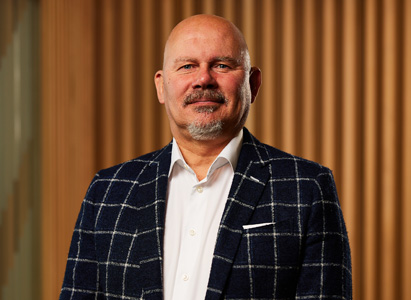
Richard Jones
Chief Executive Officer
Zenith Group
30th September 2026
Mark Phillips
Chief Financial Officer
Zenith Group