
Different types of EV chargers
Our handy charger and connector guide will tell you everything you need to know about fuelling your EV.
We’ll break down the different types of chargers and speeds available, which cables and plugs you’ll need, and answer some frequently asked questions.

Top tip
Before we get into the types of electric car chargers, it’s worth noting that EV chargers often advertise the time it takes to reach 80%. This is because EV batteries have a longer lifespan if the battery is maintained between 10% and 80%.
The main types of EV chargers are:
- Rapid and ultra rapid (most public chargers)
- Fast (home chargers are typically fast chargers)
- Slow
- Tesla Supercharger
Charging your car at home overnight is typically more affordable than using a rapid or ultra rapid public charger.

Rapid & ultra rapid EV chargers
Charging Times & Speed
You’ll find rapid and ultra rapid chargers when you’re out and about – lots of supermarkets, petrol stations, public car parks, and offices now have them.
We recommend downloading ZapMap so you can find the ones nearest to you or plan your charging breaks when driving long distances.
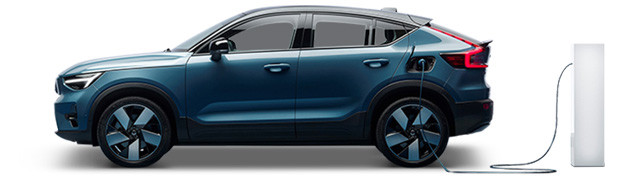
Rapid chargers
10% to 80% in 30-60 mins
Charging time
Between 50-100kW
Watts range
Ultra rapid chargers
10% to 80% in 15-30 mins
Charging time
Minimum of 100kW
Watts range
Charger Compatibility
Most modern EVs are compatible with rapid and ultra-rapid chargers, but make sure to check your car’s charging capability before plugging in (you’ll find this information in your car’s manual).
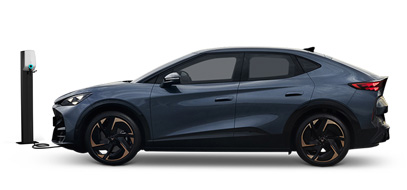
Rapid & Ultra-rapid Connectors
Rapid and ultra-rapid chargers are usually tethered, which means they come with a charging cable attached, and they generally use CCS (Combined Charging System) and CHAdeMO connectors.
CCS is becoming the market standard, but CHAdeMO might still be required for imported or older EV models (like the Nissan Leaf).

CHAdeMO – Charger-side connector

Combined charging system (CCS) – Charger
Fast EV Chargers
Charging Time & Cables
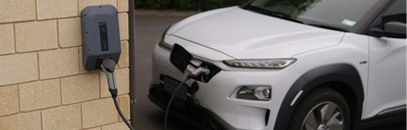
10% to 80% in 5-6 hours
Charging time
Between 7-22kW
Watts range
Most home chargers are fast chargers. Some newer models can charge up as quickly as 3 hours and some older models can take up to 8. Some fast chargers are untethered, meaning you’ll need to attach a charging cable to use them.
We recommend that you keep a spare cable in your boot in case you need to use an untethered fast charger away from home.
Fast Charger Connectors

Type 2 connectors
In the UK and Europe, fast chargers use Type 2 connectors, which is the standard type of connector for EVs and plug-in hybrids.

Type 1 connectors
Some older or imported EVs still use Type 1 connectors or a 3-pin plug (generally speaking, these take longer to charge).
Slow EV chargers
Charging times & cables
In the past, slow chargers were the standard way to charge an EV at home, but most manufacturers are phasing them out and recommend that they should only be used in an emergency.
Slow chargers should not be plugged into an extension lead.

Slow chargers
Up to 24 hours
Charging time
Approximately £21
Average full charge cost
Between 3-6kW
Watts
Slow chargers are usually untethered, so you’ll need to attach a charging cable to use them.
Slow Charger Connectors
Slow chargers use Type 1, Type 2, CEE commando, and domestic three-pin plugs.
Type 1
Type 2

CEE commando
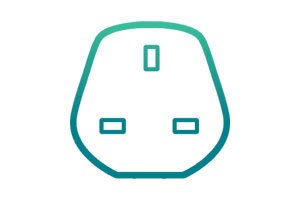
Three-pin plugs
EV Superchargers
Tesla’s Superchargers are quick and conveniently located in public areas, as well as many hotels and tourist destinations.
Click here to view Tesla’s charger map.
Types of Charger Connectors Suitable
Most new Tesla Superchargers use CCS connectors – meaning they are compatible with both Tesla cars and other brands of EV.
However, older Superchargers still use the Tesla-specific Type 2 connector, which is a modified version of a standard Type 2, meaning it can only be used by Tesla vehicles.
Tesla’s charger map will tell you which chargers near you are compatible with your car.
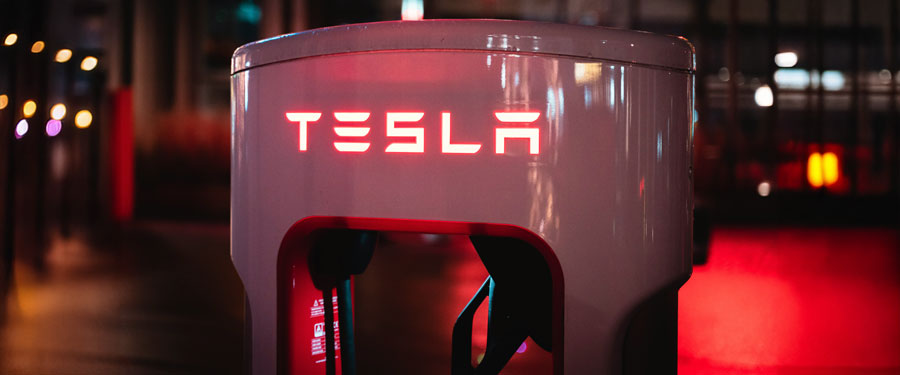
Tesla Supercharger:
- Charging time – 10-80% in 25minutes
- Average full charge cost – Approximately £38
- Watts – 250kW
[1] https://www.rac.co.uk/drive/electric-cars/charging/electric-car-public-charging-costs-rac-charge-watch/.
[2] https://www.rac.co.uk/drive/electric-cars/charging/electric-car-public-charging-costs-rac-charge-watch/.
[3] https://www.rac.co.uk/drive/electric-cars/charging/electric-car-public-charging-costs-rac-charge-watch/.
Electric Car Charger FAQs
Yes, most EVs come with a charging cable as standard, although this depends on the individual retailer and whether you buy the vehicle new or used. A new EV should come with a Type 1 or Type 2 cable for fast charging at home and public charging stations.
In the UK, the installation of an EV charger at home should cost approximately £800-1,200, including the cost of the charger itself.
The cost can be influenced by things like the specific setup of your home and where you’d like your charger installed, the location of your fuse box, and any non-standard wiring and cable routing considerations.
Untethered chargers are often cheaper than tethered models.
Yes, you can get a grant for a home EV charger. The UK Government offers an Electric Vehicle Chargepoint Grant, which pays out up to £350 towards the installation of an EV charger at your property.
While there are specific eligibility criteria, there’s funding available for both homeowners and renters, with different grant options for chargers on off-street parking and cross-pavement solutions.