
Fleet industry highlights
With the new tax year on the horizon, recent developments are setting up 2026 to be an eventful year for fleet operators, with updates on ZEV Mandate targets, changes in AMAP rates, and rising fuel prices due to the conflict in the Middle East.
Our Consultancy team have summarised the month’s key stories and what they mean for you and your fleet.
Chancellor hints at AMAP increases
The Chancellor of the Exchequer, Rachel Reeves, is considering increasing Approved Mileage Allowance Payment (AMAP) for grey fleet drivers, following a 15-year freeze.
For those driving their own car or van for work purposes, AMAP rates currently sit at 45p per mile for the first 10,000 business miles and 25p per mile thereafter, without incurring tax.
The RAC Foundation’s analysis, which used 2003 Unison data, suggested that AMAP should be 63.4p per mile.
The decision is still in review, and no new amount has been announced. However, the potential increase has been welcomed by Unison, who have long argued that the current AMAP does not reflect real-world costs and is acting as a hidden tax on workers, especially those in the public sector.
More on AMAPZEV Mandate targets on track
Both the UK car and van markets met or exceeded Government zero-emission vehicle (ZEV) mandate targets for 2024, once efficiency-related flexibilities were applied.
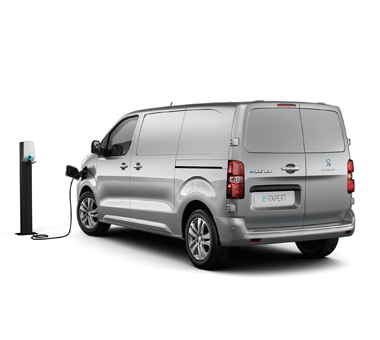
ZEV mandate requirements
The Department for Transport’s recent 2024 Compliance Report revealed that due to the efficiency-related flexibilities, car manufacturers effectively only needed 17.3% of new registrations to be ZEVs. Consequently, manufacturers actually exceeded the mandated 22% target – 4.7% was generated through CO2-to-ZEV credits, as well as a further 1.2% in borrowed credits.
Similarly, van manufacturers met their 10% target through 6.8% of actual sales plus 5.3% from CO2 conversion flexibilities.
Although the ZEV mandate is widely regarded as the catalyst for the rise in EVs, there are concerns around whether the flexibility of the targets dilute the environmental benefits of the initiative.
ZEV mandate progressHow has the conflict in the Middle East impacted fuel prices?
The RAC has tracked the changes in UK petrol and diesel prices following the conflict in the Middle East that started on 28 February 2026. Nearly a month on from the initial announcement, prices for both petrol and diesel continue to rise.
Unleaded petrol prices: difference of +10.7 pence per litre
131.6p per litre
February 2026
142.3p per litre
March 2026
Diesel prices: difference of +20.46 pence per litre
141.6 pence per litre
February 2026
162.06 pence per litre
March 2026


