
As part of the Road to Zero initiative, the government is committed to helping increase the number of electric vehicles (EVs) on the road, which will improve air quality in major cities.
The way motor tax is structured by the government reflects this priority and there are currently a range of incentives for EV drivers.
Incentives include:
- Low Benefit-in-Kind tax (BiK)
- Preferential tax position for salary sacrifice schemes
- Government grants
- Employer’s Class 1A National Insurance savings

Company Car tax & Benefit-in-Kind (BiK) for EVs
EVs offer more financial benefits and cost savings than petrol and diesel cars, including lower tax rates and congestion charges.
Benefit-in-Kind (BiK) at 4%
For tax year 2026/27 the company car tax percentage for a fully electric, zero-emitting vehicle is 4% and it remains frozen at that rate until March 2027 – considerably lower than a typical petrol or diesel company car tax rate.This will increase by 1% each year until the end of the 2029/2030 tax year.
What is Benefit-in-Kind?Electric vehicle road tax
- New electric vehicles registered from 1 April 2025 benefit from a lower first year road tax (VED) of £10 (compared to £110 or higher for petrol and diesel cars).
- From the second year the standard rate applies to all cars at £195.
- There is an additional tax, the Expensive Car Supplement (ECS) of £425 per year on top of the VED charge for cars with a list price above the threshold. The ECS is paid for 5 years, years 2 -6 after the first registration.
Thresholds
- New cars registered from April 2026, ECS only applies to zero-emission cars (electric) with a list price above £50,000.
- For ICE cars (petrol and diesel) the threshold remains at a list price of £40,000.

Government grants for electric vehicles
Electric vehicles are more expensive to manufacture than traditional combustion engine vehicles, so the government grant offsets some of this initial up-front cost.
The grant is available regardless of whether you buy, contract hire, or personal lease an electric vehicle.
When leasing, the grant will be taken into account when calculating the repayments payable.
Electric car grant
For new electric cars (with zero-tailpipe emissions), priced up to £37,000, there are two levels of discount.
Eligibility is dependent on sustainability assessments as well as battery range and warranty or the model and manufacturer.
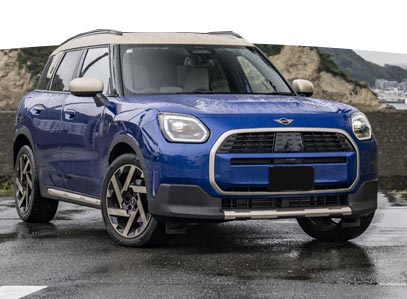
- £3,750 reduction – for vehicles meeting the top sustainability criteria (band 1), such as certain models of the Nissan Leaf, Ford Puma Gen-E, Mini Countryman Electric, Renault 4, and Renault 5.
- £1,500 reduction – for other qualifying EVs (band 2).
These discounts are applied automatically at purchase, or during the quoting and ordering stage if you are accessing the car via a salary sacrifice scheme, and the scheme is funded through to 2028/29.
Plug-in van grant (N1/light commercial vehicles)
- For vans, the maximum available is £2,500 for a small van and £5,000 for a large van.
- To be eligible, the van must be able to travel at least 60 miles without any emissions and emit less than less than 50g/km CO2.
- Each business, organisation, or individual may receive up to 1000 grants each financial year (01 April – 31 March).
Plug-in truck grant
- For the first 250 truck orders placed, the grant covers 20% of the purchase price, up to a maximum of £16,000.
- This is limited to 10 per customer.
- After the order limit is reached, a maximum grant of £5,000 will apply.
- These vehicles must have CO2 emissions at least 50% less than the equivalent conventional Euro 6 vehicle that can carry the same capacity.
- They must also be able to travel at least 60 miles without any emissions at all.
Plug-in motorcycle grants
- The grant will pay for 35% of the purchase price, up to a maximum of £500 for motorcycles priced below £10,000.
- These vehicles must have no tailpipe emissions and be able to travel at least 31 miles.
Electric vehicle charge point grant
Drivers with a new electric car, van or motorcycle on the list of OZEV-approved electric vehicles can apply for the Electric Vehicle Chargepoint Grant (EVCG).
- The grant provides support towards the cost of purchasing and installing EV charge points at residential properties.
- Eligible applicants can get 75% off the cost to buy and install an EV charge point socket, up to a maximum of £350.
- Your OZEV-approved installer will claim the grant on your behalf and deduct it from your bill.
You are eligible if you are:
- A renter with your landlord’s permission
- A flat/apartment owner with dedicated parking
- A household with allocated parking spaces
Standard homeowners with driveways are not eligible.
Your property is eligible if:
- It has on-street parking with cross pavement channels or gullies.
- You must also have permission from your local council and highways authority.
Please note that availability and costs vary across the country.
Workplace Charging Scheme (WCS) and Landlord & Car Park Grants are also available for business installations.
For more information on eligibility for the scheme and how to apply please head to gov.uk.
Congestion charges
From 2 January 2026 the standard congestion charge in London will rise from £15 to £18.
- Electric cars benefit from a 25% discount so pay £13.50 instead of £18 (you must register for Auto Pay to be eligible for this).
- Electric vans and electric HGVs get a 50% discount (you must register for Auto Pay to be eligible for this).
EV Tax FAQs
Yes, you do pay road tax on electric cars.
From 1 April 2025, fully electric vehicles moved into the standard VED system:
- Registered on or after 1 April 2025
– £10 in the first year
– £195 per year from year two - Registered between 1 April 2017 and 31 March 2025
– £195 per year - Registered between 1 March 2001 and 31 March 2017
– £20 per year
Yes, you do pay tax for a plug-in hybrid car, the rate you pay depends on when your car was first registered.
- Registered before 1 April 2017 – this is determined by the car’s CO2 emissions, which you can view here.
- Registered on or after 1 April 2017 – you will pay the standard rate of £195.
Yes, there has been a gradual and predictable increase over the past few years. However, EVs remain cheaper to tax overall than petrol and diesel cars, especially in the first few years of ownership.
In FY26/27:
- EVs have a BiK rate of 4%.
- Plug-in hybrid cars range from 4-16%.
- BiK rates on petrol and diesel cars ranges between 17-37%.