
As charging infrastructure expands and vehicle ranges improve, electric light commercial vehicles (eLCVs) are becoming a practical and increasingly common choice for tradespeople, fleets, and delivery businesses. Understanding how far electric vans can travel, how charging works in real‑world use, and what this means day-to-day is key to deciding whether an electric van fits your operations.
What is an electric van?
Electric vans, are designed to perform the same tasks as traditional vans, but are powered by an electric battery, rather than a petrol or diesel engine. They typically offer instant torque, quieter operation, and lower running costs.
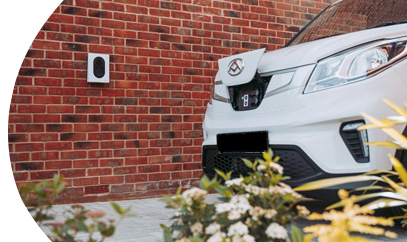
Common electric van types
Most manufacturers now offer a growing range of electric vans alongside traditional petrol and diesel models, giving businesses more choice than ever when selecting the right vans for their fleet. These options span all major segments, including:
- Small city vans and compact electric vans designed for urban deliveries and last-mile logistics
- Medium electric panel vans commonly used by tradespeople and service-based businesses
- Large high-roof and long-wheelbase electric vans built for logistics fleets and high-volume transport
In addition to increased model availability, there is now a wider selection of battery sizes and configurations, allowing businesses to match vehicles to their specific operational requirements. Many modern electric vans offer real-world driving ranges of 150 to 250+ miles on a single charge, with some newer models pushing even higher depending on load and driving conditions.
The growth of the number of models available highlights how the electric van market has matured, moving beyond limited early options to a competitive landscape of high-performance, business-ready eLCVs. As a result, businesses are no longer restricted to a simple diesel vs electric choice but can select from a diverse range of electric vans optimised for different industries, routes, and workloads.
Which LCV is right for my business?Why businesses are choosing electric vans
For many operations, electric vans now meet daily requirements without compromise. More and more businesses are switching to electric and benefitting from:
- Lower running and maintenance costs
- Exemption from or significantly reduced clean air zone charges
- Improved sustainability credentials

Understanding electric van range
Electric van range refers to how far the vehicle can travel on a full battery charge. While official range figures exist, driving style and conditions can have an impact.
Factors that impact range
Electric van range is influenced by:
Top tip
Pre-conditioning (using the air-con or heating) whilst the van whilst is still plugged in can extend its range.
- Payload weight: heavier loads reduce efficiency
- Driving style: aggressive acceleration and braking increases energy use – using adaptive cruise control can help boost range
- Temperature: cold weather reduces battery efficiency
- Terrain: hills and uneven routes use more power
Typical daily mileage suitability
For most trades and urban delivery routes, daily mileage often falls well within the real‑world range of modern electric vans, allowing a full working day on a single charge.
Urban vs motorway driving
Electric vans tend to be more efficient in urban environments, where regenerative braking recovers energy. Regenerative braking is when the friction caused during braking is converted into electricity that the car can reuse.
Most modern models can still manage sustained, high-speed motorway driving, but depending on the length of your journey, a charging break may be necessary.
Charging times and route planning
Charging speed depends on where and how drivers charge. Most businesses typically rely on a combination of locations depending on their access and working patterns.
Understanding charging speed helps drivers plan routes, breaks, and depot usage more efficiently, especially for mixed‑distance days.
AC charging
The national grid supplies AC (alternating current) power, which the van’s onboard converter changes into DC (direct current) to store in the battery via Type 2 connectors. It’s slower than rapid charging but often cheaper and allows drivers to start their day with a fully charged vehicle.
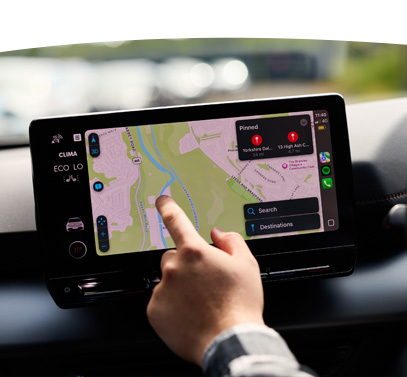
Home charging
Home charging is a simple and straightforward process easily integrated into daily routines. It’s especially beneficial for sole traders, as home chargers are easy to install and if a van is charged overnight, you’ll access the lower tariffs and start each day with a fully charged van.
Depot charging
Like home charging, depot charging allows for cost-efficient overnight charging.
Investing in depot charging is advantageous for businesses with multiple vans, as by having chargers at a work base you’ll have greater oversight of your fleet, making compliance and maintenance more transparent and straightforward.
DC rapid charging
DC (Direct Current), also known as rapid charging, bypasses the vehicle’s internal charger to send power directly to the battery unlocking massive charging speed. Rapid chargers are found at motorway services and public charging hubs and normally use CSS chargers.
Public charging
Public chargers, provide flexibility for longer routes or journeys away from your base. We recommend downloading ZapMap to help you find available or cheaper chargers en route.
Charging speed typically reduces after around 80% capacity to protect battery health. For this reason, rapid chargers are most efficient for partial top‑ups rather than full charges.
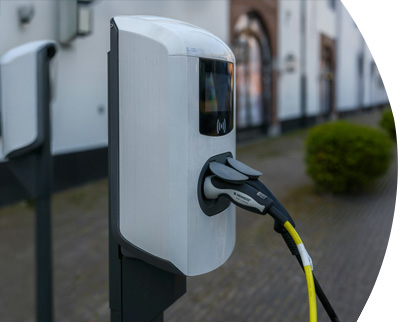
Charging times and route planning
Electric vans can change how journeys are planned, but not necessarily how work gets done.
Typical daily usage patterns
In everyday operations, electric vans are often simpler to run than many expect. A common pattern is for vehicles to be charged overnight, either at home or at a central depot, meaning they begin each working day with a full battery. This mirrors the routine of charging a mobile device and removes the need for frequent visits to public charging points.
For many urban, trade and local delivery applications, modern electric vans are capable of completing a full day’s work on a single charge. Routes in these sectors tend to be relatively short and predictable, which makes it easier for businesses to plan journeys and manage energy use effectively. This predictability also helps build confidence in electric fleets. Knowing daily mileage requirements in advance allows operators to match routes to vehicle range and schedule charging accordingly, reducing uncertainty and minimising disruption.
While real-world range can be influenced by factors such as payload, weather conditions, terrain and driving style, these are typically manageable considerations rather than significant barriers. With appropriate planning, they can be accounted for as part of normal fleet operations, much like fuel consumption is managed with conventional vehicles.
Occasional need for en-route charging
While most electric van use centres around overnight or depot charging, there are times when public charging becomes a useful when vehicles are operating outside their usual daily patterns. A relatively short stop can add enough range to comfortably complete the remaining journey, helping drivers stay productive without needing to significantly alter their schedule.
Importantly, for many operators this kind of charging is not a daily requirement but an occasional support tool. With well-planned routes and reliable overnight charging, most journeys can be completed without needing to stop. Public charging simply acts as a practical backup, giving drivers and fleet managers added confidence when the day doesn’t go exactly to plan.
Fleet decisions and infrastructure
When transitioning to electric vans, planning charging infrastructure is as important as the type of vans you select and can help maximise efficiency and minimise costs.
A key consideration is matching electric vehicle range to daily route patterns. Businesses with predictable delivery routes or urban service areas can optimise performance by selecting vans with the right battery size, avoiding unnecessary costs while ensuring reliable operations.
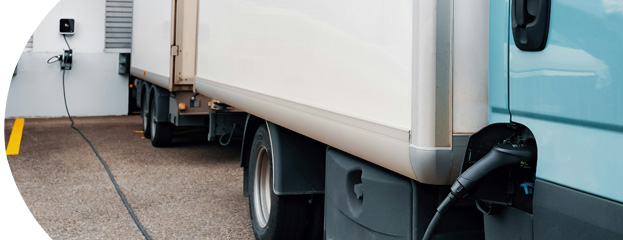
Investment in depot charging infrastructure is another critical factor. Many companies install on-site EV chargers to enable overnight charging, ensuring vehicles are ready for use each day. This approach reduces reliance on public charging networks and allows fleets to benefit from lower off-peak electricity rates.
Advanced solutions such as smart charging systems and fleet energy management tools can further improve efficiency. These technologies help balance energy demand across multiple vehicles, reduce charging costs, and support scalability as fleets grow.
By aligning electric van range, route planning, and charging solutions, businesses can improve uptime, reduce operational costs, and accelerate their transition to sustainable LCV fleet management.
Growing business adoption
The adoption of electric vans for business is rapidly increasing as improvements in technology and infrastructure make them a practical choice for everyday operations. Modern electric vans now offer longer driving ranges, faster charging times, and improved reliability, making them suitable for a wide range of applications, from last-mile deliveries to regional logistics.
At the same time, the expansion of public EV charging networks and workplace charging solutions is helping to remove one of the biggest barriers to adoption. Businesses also benefit from lower running costs, reduced maintenance, and potential government incentives that support the switch to electric vehicles.
As a result, electric vans are no longer viewed as a niche or environmentally driven option. Instead, they are becoming a mainstream commercial vehicle solution, adopted by businesses of all sizes looking to reduce costs, improve efficiency, and meet sustainability targets.
With continued advancements in battery technology, charging infrastructure, and total cost of ownership, the shift toward electric commercial vehicles is set to accelerate even further.
In summary
Electric vans are a practical, efficient solution for many businesses. Thanks to improved driving ranges, expanding charging infrastructure, and a growing variety of models, they now meet the needs of many tradespeople, delivery services, and fleet operators without compromising productivity.
By understanding how range is affected by real‑world conditions and how different charging options fit into daily routines, businesses can confidently integrate electric vans into their fleets. For most use cases, overnight charging and predictable routes mean vehicles are ready to perform throughout the working day, with public charging providing helpful backup when needed.
Electric van FAQs
For many drivers and routes, yes. Most daily mileage patterns fall within real-world electric van range.
Electricity and maintenance costs are typically lower, especially for high mileage or urban use.
Yes, with planning. Public rapid charging makes longer trips possible, though they may require additional stops.
Drivers often charge at home or depots and use public chargers when needed for longer routes.
Both the Renault Master E-Tech and Nissan Interstar-e have a range of up to 285miles.